The Social Contract

For centuries, Western political philosophy rested on a founding story: the social contract. Rational individuals, recognizing the dangers of a lawless world, came together to form societies. They surrendered some freedom in exchange for order, rights, and protection. Government derived its legitimacy from this agreement. And the protections it offered, the story went, applied to everyone.

This is what most of us encounter in school. It is not wrong, exactly. But it is incomplete in ways that matter enormously.
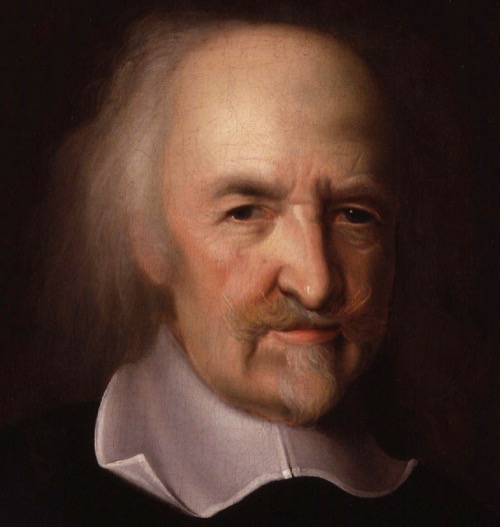
Portrait of Thomas Hobbes
1651

Thomas Hobbes

Leviathan

In the "state of nature" — without law or government — life would be a war of all against all: solitary, poor, nasty, brutish, and short. Rational people, Hobbes argued, would consent to surrender some freedom to a powerful sovereign in exchange for security and order. From this pragmatic bargain, civil society is born.
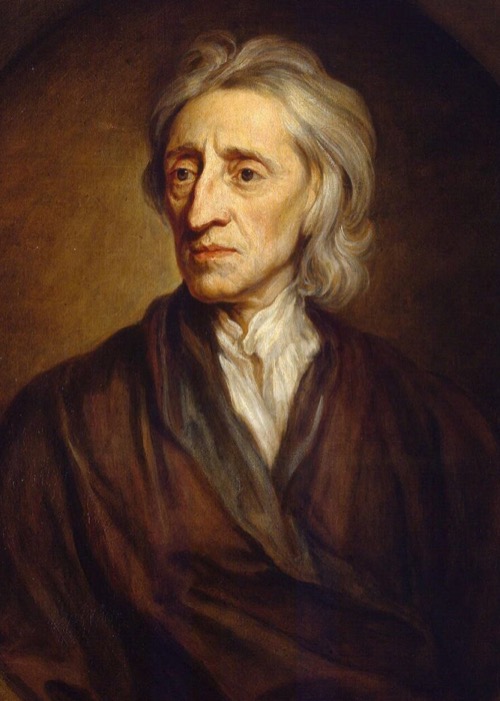
Portrait of John Locke
1689

John Locke

Two Treatises of Government

Where Hobbes saw the contract as survival, Locke saw it as protection for something more: natural rights. Every person is born with inherent rights to life, liberty, and property. Government exists not to dominate but to protect these rights. And if it becomes tyrannical, the people have the right — even the obligation — to dissolve it.
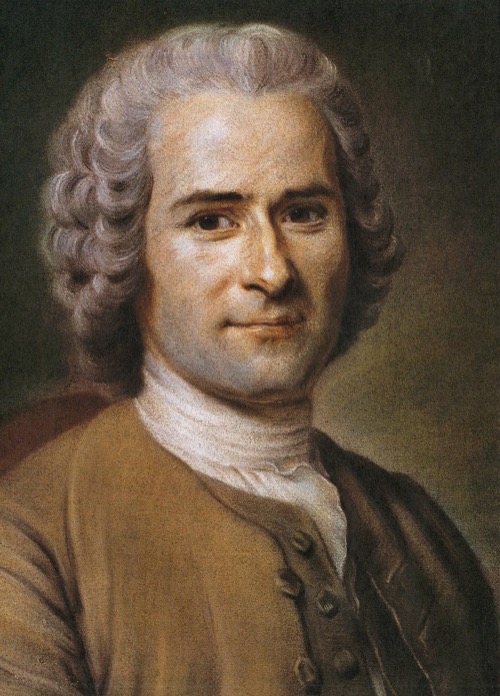
Portrait of Jean-Jacques Rousseau
1762

Jean-Jacques Rousseau

The Social Contract

Rousseau took the contract in a more democratic direction. The point wasn't just protection — it was collective self-governance. When free and equal people form a political community, they give voice to a "general will": a shared understanding of the common good. The social contract, properly formed, guarantees both liberty and equality for all who enter it.

Portrait of Immanuel Kant
1785 – 1795

Immanuel Kant

Groundwork / Perpetual Peace

Kant gave the tradition its moral backbone. Every rational being, he argued, deserves to be treated as an end in themselves — never merely as a means to someone else's purposes. This universalism formed the ethical foundation of the contract: a moral order applying equally to every human being, regardless of origin or circumstance.
SOCIAL CONTRACT

Executed in the Age of Reason, Circa 1651–1795

All men are created equal. Every rational being possesses inherent rights to life, liberty, and property. Government derives its just powers from the consent of the governed. Every person shall be protected equally under the law.

* "All men" does not include the enslaved, the colonized, or the Indigenous — those whose humanity the contract declined to recognize.

Property rights are sacred and shall be protected by the full force of the state against all encroachment.

* These property rights were designed to protect land already acquired through conquest and dispossession. The taking of that land was not a violation of the contract — it preceded it.

The governed shall have the right to dissolve any government that violates their natural rights.

* "The governed" refers to those whose consent was sought — which did not include those who were enslaved, colonized, or dispossessed. They were governed without consent, by design.

The Racial Contract

In 1997, philosopher Charles W. Mills published a book that changed how many people read everything that came before it. His argument was direct, carefully supported, and uncomfortable: the social contract was never universal. It was always two contracts — one visible, one hidden.

The visible contract promised equality, rights, and protection. The hidden contract — the Racial Contract — organized who those promises actually applied to.

"The Racial Contract is not a contract between everybody — but between just the people who count, the people who are recognized as fully human."
— Paraphrasing Charles W. Mills, The Racial Contract, 1997

Mills' Central Argument

The social contract tradition — Hobbes, Locke, Rousseau, Kant — was not merely incomplete or culturally limited. It was built on a prior, unacknowledged agreement: a racial contract. This contract established a racial polity, a racial state, and a racial juridical system. It divided humanity into persons — those with full moral and political standing — and subpersons — those whose labor, land, and bodies could be appropriated without the consent that a person would require.

The racial contract is not a conspiracy or a secret plot. It operates in the open — through law, through policy, through institutional practice, through the stories a society tells about itself. It is hidden not because it is buried, but because the epistemology it produces makes it difficult to see.

Three Dimensions of the Racial Contract

01

Political

The racial contract determines who belongs to the political community. Who can vote? Who can own property? Who is a citizen? Who has rights the state is obliged to protect? The "state of nature" that Hobbes and Locke described as a universal starting point was not universal — colonized and enslaved peoples were placed in a state of nature by European powers, not offered the exit that the social contract promised.

02

Moral

The moral equality that Kant declared universal was never applied universally. Within the circle of persons, moral rules applied. Outside it — for those designated as subpersons — different standards governed. Violence, dispossession, and exploitation that would be unthinkable if directed at a person became permissible, even virtuous, when directed at a subperson. Mills is careful here: this is not hypocrisy. It is the contract functioning exactly as designed.

03

Epistemological

Perhaps Mills' most striking claim: the racial contract doesn't only organize politics and economics — it organizes perception. It produces a structured way of not knowing that he calls the epistemology of ignorance. The contract requires its beneficiaries not to see it. It generates patterns of perception and interpretation that make racial domination appear natural, accidental, or invisible to those who benefit from it.

The Epistemology of Ignorance

Most of us were taught that ignorance is a gap — something you haven't yet learned. Fill in the gap, take the course, read the book, and the ignorance disappears. Mills argues that white ignorance is something fundamentally different: not a gap, but an achievement. The racial contract actively produces this ignorance. It is cultivated through institutions, maintained through the stories a society tells about itself, enforced through what gets taught and what gets omitted.

How the Epistemology of Ignorance Works

Cognitive

Racialized patterns of perception shape everyday life. Who is seen as threatening, who is seen as belonging, whose credentials are questioned, whose expertise is assumed. Whose pain reads as real and whose reads as suspicious. These are not neutral perceptions — they are trained by the contract.

Moral

The contract structures what suffering registers as morally serious. Not because most people are deliberately cruel, but because the racial contract has organized moral attention to center particular lives. The suffering that falls outside that circle becomes — in a very practical, felt sense — harder to recognize as equivalent. This is moral dysfunction built into the system, not individual failure.

Historical

Collective memory is not neutral. Slavery, colonialism, and genocide are routinely framed as distant chapters — unfortunate, but closed. This framing is strategic. It walls off the "past" from the "present," making it difficult to trace how foundational dispossessions continue to shape material conditions today. The line between history and now is drawn in a very particular place, for a very particular reason.

Pause and Consider

Think about the history you learned in school. Whose story was centered? What was left out — and who benefited from that absence?

This text is not stored anywhere. It exists only for the act of thinking.

The Material Contract

The racial contract is not only philosophy. It organizes the material world — land, labor, wealth, and punishment — along racial lines. Cedric Robinson, who coined the term "racial capitalism," argued that capitalism did not produce racism from scratch. Racism was already embedded in European feudalism, and capital accumulation developed through racial differentiation, using it to segment labor markets, suppress wages, and justify extraction.

The moments below are not separate crises or isolated injustices. They are the same contract, renewed and rewritten across time.

1500s – 1865

Transatlantic Slave Trade & Plantation Economy

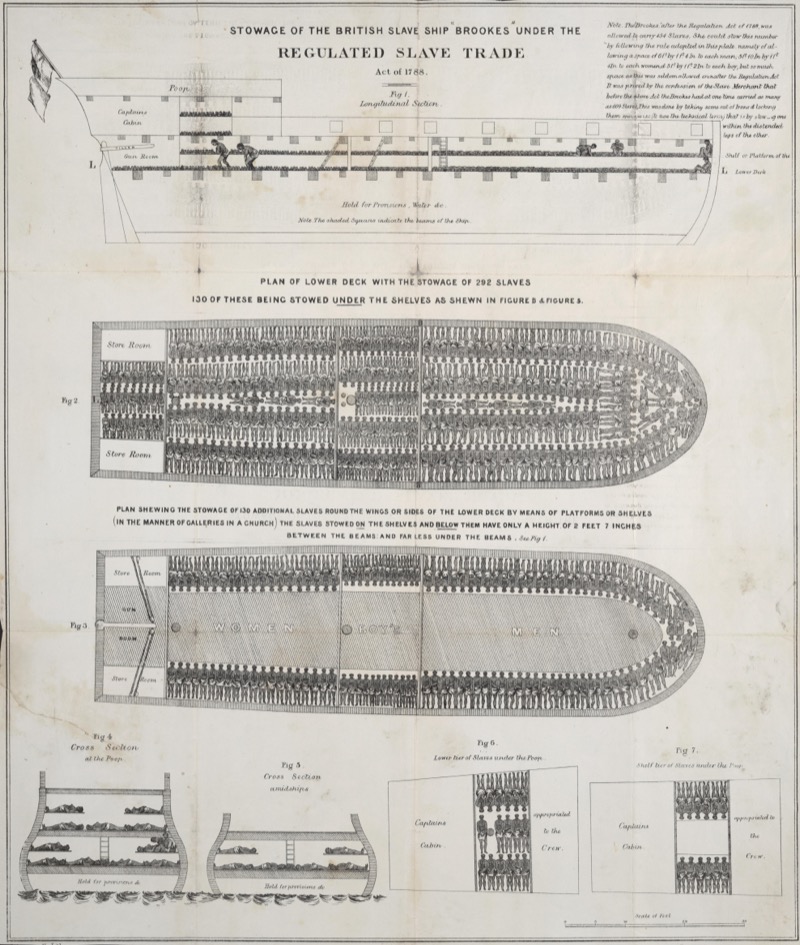
Diagram of the slave ship Brookes, showing how enslaved people were packed into the vessel
Stowage of the British slave ship Brookes, 1788. Public domain.

The enslavement of African peoples was not a deviation from the social contract — it was the racial contract in its purest economic form. Enslaved people were simultaneously excluded from personhood and central to wealth production. The entire plantation economy was organized around this contradiction: those who generated the wealth were legally defined as property, not persons, and therefore had no claim to what they produced.

1492 – Ongoing

Indigenous Land Dispossession

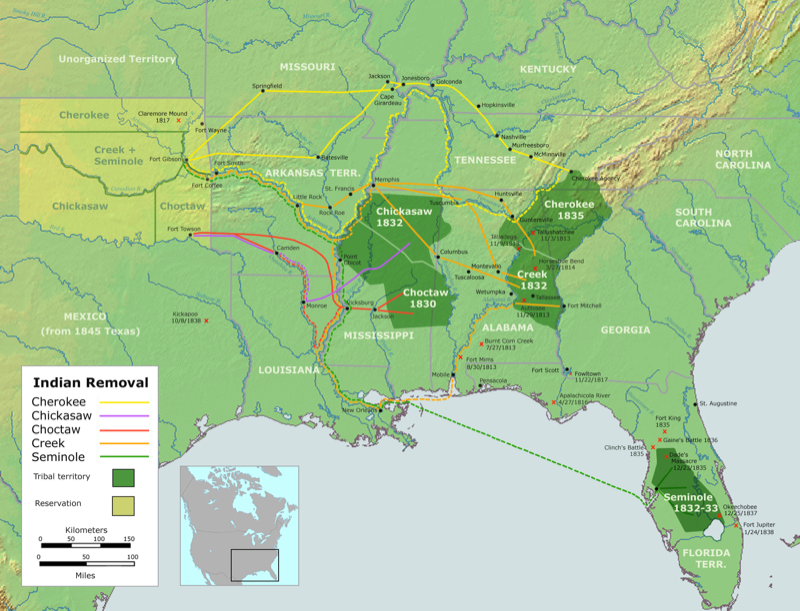
Map showing the Trail of Tears routes of forced Indigenous removal
Routes of forced Indigenous removal, Trail of Tears. Public domain.

Glen Coulthard argues that for Indigenous peoples, the foundational injustice is not only the exploitation of labor but the dispossession of land. Settler colonialism requires the elimination of Indigenous peoples' relationship to their territories so that land can be converted into property — the very property that Locke's social contract was designed to protect. Dispossession and protection are two sides of the same contract.

1877 – 1965

Jim Crow & Racial Labor Codes

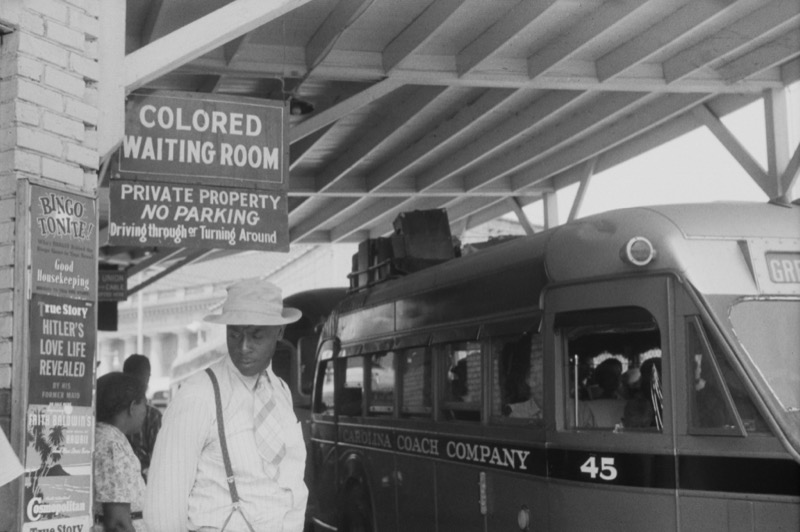
Segregation-era 'Colored Waiting Room' sign in Durham, North Carolina
"Colored Waiting Room" sign, Durham, NC. Public domain.

After formal emancipation, the racial contract was not abolished — it was rewritten. Black labor was re-captured through convict leasing, sharecropping, and legally enforced segregation that created a permanent underclass of cheap and controlled labor. The law that had once excluded Black Americans from personhood now worked to constrain the freedoms that personhood was supposed to guarantee.

1930s – Ongoing

Redlining & Wealth Extraction

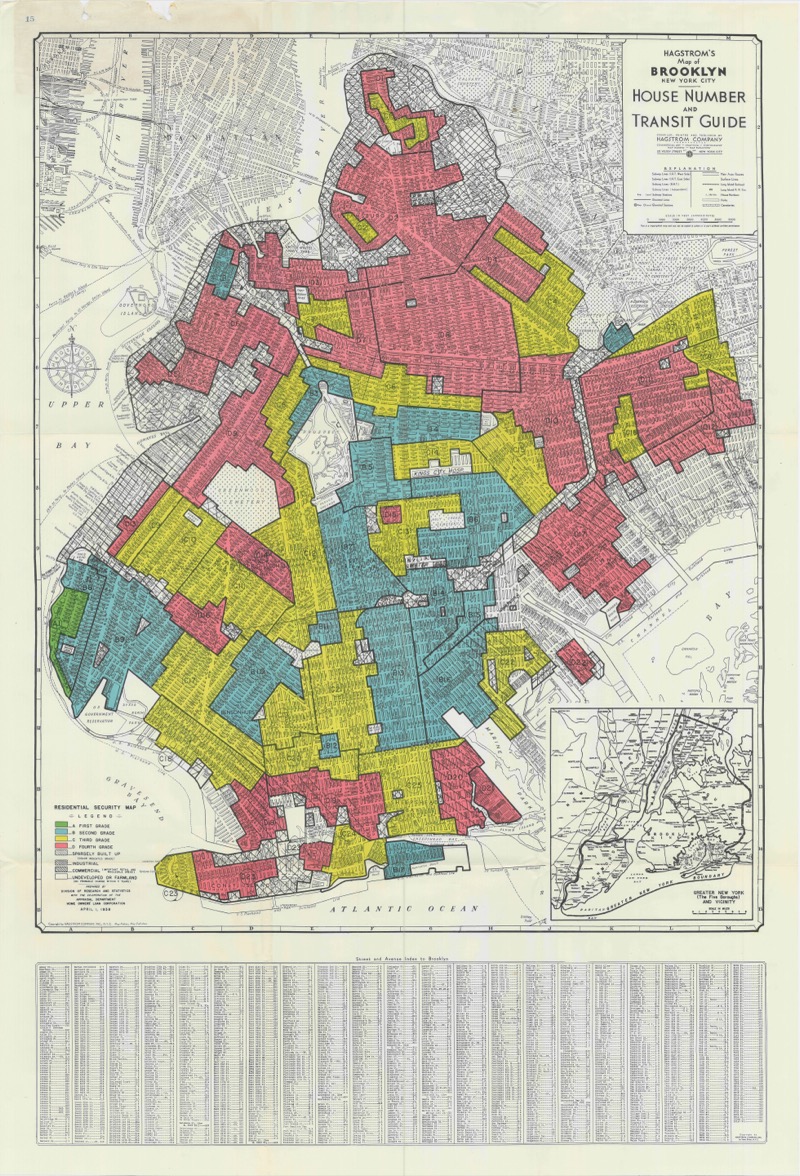
HOLC redlining map of Brooklyn, New York showing color-coded neighborhoods by mortgage risk
HOLC redlining map of Brooklyn, NY, 1938. Public domain.

Federal housing policy systematically excluded Black families from homeownership — the primary mechanism of wealth accumulation in North America through the twentieth century. The Home Owners' Loan Corporation drew red lines around Black neighborhoods, denying them access to mortgages and investment available to white families. This was not neglect. It was the racial contract organizing who accumulates and who is extracted from.

1970s – Ongoing

The Prison Industrial Complex

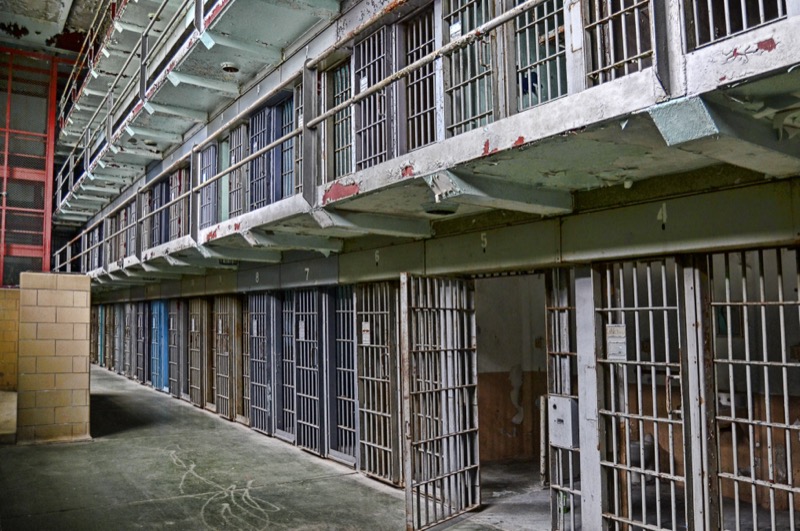
Interior view of a prison cell block
Prison cell block interior. Public domain.

Angela Davis argues that the modern prison system is not primarily a response to crime but a continuation of racial capitalism — a means of warehousing surplus populations while generating profit. The carceral system disproportionately targets Black, Indigenous, and Latinx communities, and the Thirteenth Amendment, which abolished slavery "except as punishment for crime," created a legal pathway for its continuation in a different form.

Ongoing

Migrant Farmworker Exploitation

Migrant farmworker laboring in agricultural field
Migrant farmworker in the field. Public domain.

Migrant farmworkers — including Jamaican workers on Okanagan orchards in British Columbia — face conditions structurally produced by racial capitalism: temporary legal status that creates employer dependence, physically demanding seasonal work, and wages and protections that would be politically unacceptable for citizens. Their labor is essential; their presence is temporary by design. The contract that governs their conditions is the same contract, made visible.

Pause and Consider

The racial contract doesn't just describe the past. Where do you see it operating in the economy today — in your city, your workplace, your daily consumption?

This text is not stored anywhere. It exists only for the act of thinking.

Reading the Fine Print

Mills argued that the epistemology of ignorance can be challenged — that it is not fixed, not inevitable. Recognizing the racial contract doesn't dissolve it. But it does something important: it removes the excuse of innocence.

The question shifts from "I didn't know" — which was always, in some sense, a choice — to something more demanding: Now that I know, what do I do?

About This Project

This site was developed as part of GRSJ 315: Critical Racial Theories at the University of British Columbia — a course that examines how race, racism, and racial injustice are theorized, contested, and challenged. The frameworks here — the racial contract, the epistemology of ignorance, racial capitalism — are analytical tools the course uses to understand a world that too often presents its constructed arrangements as natural ones.

Pause and Consider

What is one thing you understood differently after reading this? What will you do with that understanding?

This text is not stored anywhere. It exists only for the act of thinking.

Further Reading

These are the works this site draws from and points toward. Each offers a different angle on the same questions.

  • Mills, C. W.
    The Racial Contract (25th Anniversary Edition)
    Cornell University Press, 2022

    The book this site is built around. Short, dense, and essential. Mills makes an argument that, once read, is difficult to unread.

  • Robinson, C. J.
    Black Marxism: The Making of the Black Radical Tradition
    University of North Carolina Press, 2000

    The foundational text for "racial capitalism." Robinson traces how European capitalism was built through, not despite, racial hierarchy.

  • Jenkins, D. & Leroy, J. (Eds.)
    Histories of Racial Capitalism
    Columbia University Press, 2021

    A collection of essays that trace how racial capitalism has operated across different historical moments and geographies.

  • Coulthard, G. S.
    Red Skin, White Masks: Rejecting the Colonial Politics of Recognition
    University of Minnesota Press, 2014

    Coulthard draws on Fanon and his own Yellowknives Dene experience to theorize Indigenous resistance to the politics of settler colonial recognition.

  • Davis, A. Y.
    Are Prisons Obsolete?
    Seven Stories Press, 2003

    Concise and devastating. Davis asks what the prison industrial complex actually does — and for whom — and what would have to change for it to become unthinkable.

  • Hernández, T. K.
    Racial Subordination in Latin America
    Cambridge University Press, 2013

    Examines how racial hierarchy operates within Latin American legal and social systems, pushing back against myths of "racial democracy."